10 Questions You Must Ask Before Hiring a South Florida Roofing Contractor
———————————————————————————— Nast Roofing Co. ————————————————————————————
Hiring a
roofing contractor in South Florida is unlike hiring a contractor anywhere else in the country. Because Broward and Miami-Dade counties make up Florida’s High-Velocity Hurricane Zone (HVHZ), roofs here must be engineered and installed to withstand extreme tropical weather, intense solar UV exposure, and wind gusts exceeding 170 mph.
A new roof or major restoration is a major investment. Unfortunately, South Florida's roofing industry is also known for fly-by-night operators, unlicensed "storm chasers," and cut-rate crews who disappear the moment a building inspection fails or a leak appears.
At
Nast Roofing, we’ve served homeowners, HOA boards, and commercial property managers throughout Fort Lauderdale and South Florida for
over 30 years. We hold Florida State Certified Roofing Contractor License #CCC057134, and we believe an educated customer is our best partner.
Before signing a contract or handing over a deposit, walk through these 10 essential questions with any roofing company you consider.
1. What is your Florida State License number, and can I verify it?
In Florida, roofing is a specialized licensed trade. A handyman, home inspector, or basic home repair outfit cannot legally replace a roof or perform major structural roof repairs.
Ask for the contractor's license number upfront. In Florida, a certified roofing contractor will have a license beginning with the letters
"CCC" (Certified Roofing Contractor).
You can confirm their license status in under a minute on the
Florida Department of Business and Professional Regulation (DBPR) public portal. Verify that the license is:
- Marked Current, Active
- Issued in the name of the individual or qualifying agent operating the company you are dealing with
- Free of unresolved state disciplinary actions or suspensions
Contractor Note: A local municipal "business tax receipt" or "occupational license" is simply a tax registration; it is
not a construction contractor license. Under
Florida Statute § 489.127, contracting without a state license is illegal and carries criminal penalties.
2. Do you carry both General Liability and Workers' Compensation insurance?
Never settle for a contractor simply saying,
"Yes, we're insured." You must verify two distinct types of coverage by requesting an official
Certificate of Insurance (COI) sent directly from their insurance agency to you:
- General Liability Insurance: Protects your building, landscaping, and personal property if an accident occurs on-site (such as a fire or structural collapse during installation).
- Workers' Compensation Insurance: Protects you if a roofer slips or suffers an injury while working on your property. Under Florida law, construction businesses with one or more employees must carry workers' compensation. If you hire an uninsured or "exempt" crew and a worker gets hurt, the financial liability can fall directly onto you or your homeowner's insurance policy.
3. Will you pull the required municipal building permit in your company’s name?
If a contractor asks
you to pull an "Owner-Builder" permit, run the other way.
Unlicensed contractors use this loophole because building departments will not issue roofing permits to anyone without a valid state license. By pulling an owner-builder permit, you assume all legal, safety, and code compliance liabilities as the general contractor.
A legitimate contractor will handle the entire municipal permitting process from start to finish, including engineering wind-load calculations, Miami-Dade NOA submissions, and scheduling all mandatory city inspections.
4. What is the difference between your workmanship warranty and the manufacturer’s warranty?
Roofing warranties come in two distinct layers, and understanding the difference prevents major surprises later:
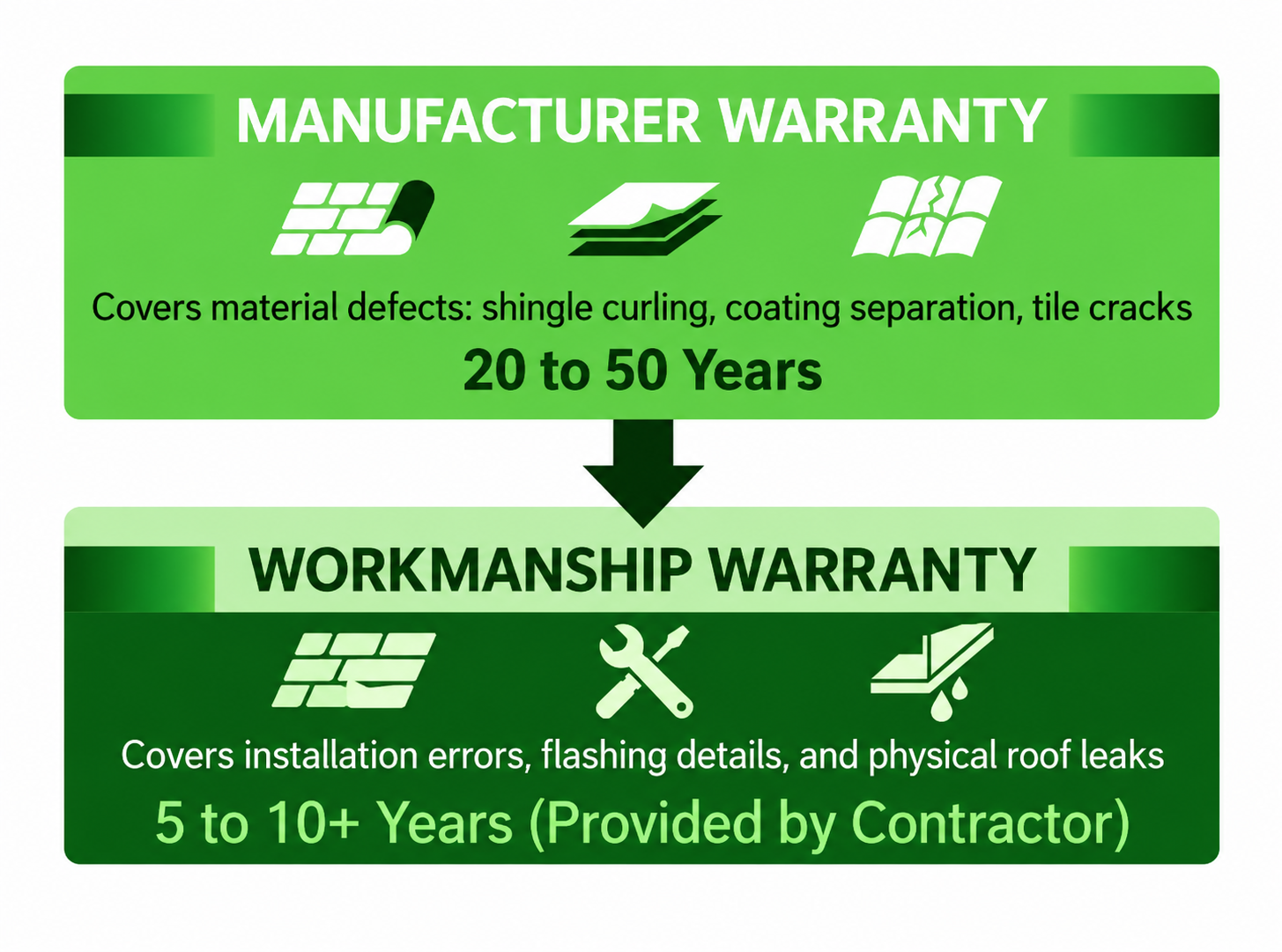
A 30-year manufacturer warranty does not mean the roofer covers your leaks for 30 years. If water enters your building because an edge flashing was installed improperly or nails were overdriven, the manufacturer will deny the claim, citing improper installation. Ask the contractor exactly how many years their
workmanship guarantee lasts and what steps are involved if a repair is needed.
5. Do all proposed roofing materials have a valid Miami-Dade Notice of Acceptance (NOA)?
Because South Florida falls within the HVHZ, general Florida Product Approval is not enough. Every product installed on your roof, shingles, tiles, metal panels, underlayment, sealants, fasteners, and attic vents, must hold an active
Miami-Dade Notice of Acceptance (NOA).
Ask your prospective roofer to provide the NOA numbers for the materials specified in your written estimate. This documentation confirms the materials have been laboratory tested to withstand hurricane-force wind uplift and severe water infiltration.
6. What type of underlayment will you install beneath the surface?
The tiles or shingles on your roof are the visible shield, but the
underlayment is the waterproof membrane that actually keeps water out of your living space.
Traditional organic 30# felt paper deteriorates quickly under South Florida's extreme thermal heat. Ask if the contractor installs a
self-adhered (peel-and-stick) secondary water barrier. In addition to providing superior leak defense if storm winds dislodge an outer tile, a sealed deck underlayment qualifies you for substantial
Wind Mitigation Discounts on your Florida homeowner's insurance premium.
7. How will you protect my property and landscaping during tear-off?
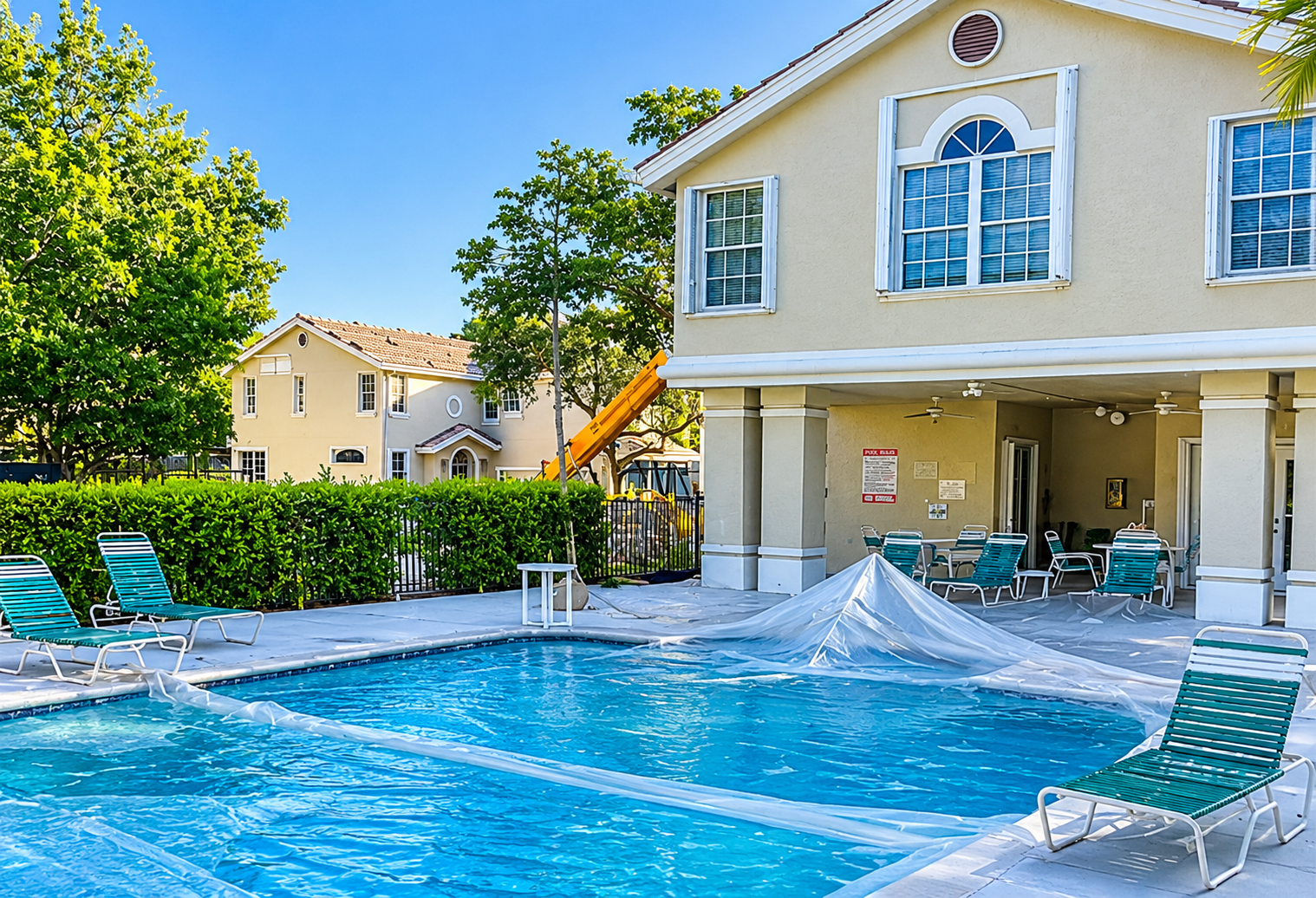
Tearing off an old roof is messy, physical work involving thousands of pounds of old tile, sharp nails, rotted wood, and tar debris.A professional contractor will have clear site cleanup protocols to keep your property safe for vehicles, pets, and children throughout construction.
Ask the contractor about their property protection plan:
- How will they protect sensitive AC condenser units, pool equipment, and delicate landscaping?
- Do they use specialized tarps and ground nets to catch falling debris?
- How often do they run magnetic sweepers across the driveway, walkways, and yard to collect stray roofing nails?
8. Who will supervise my project on-site every day?
Some roofing companies rely on outside sales reps to close contracts, after which an unsupervised sub-crew handles the actual installation.
Ask specifically:
- Who is the dedicated project manager or superintendent on-site?
- Will there be an English-speaking supervisor present to answer questions and walk the job with municipal building inspectors?
- How often does company leadership visit the job site?
9. How do you handle rotten plywood decking or unforeseen structural damage?
When removing an old roof, it’s common to uncover hidden rotted plywood decking or damaged fascia boards that weren't visible from the ground. Transparent contracts clearly define replacement costs upfront, protecting you from unexpected change orders during construction.
A reputable roofer will not install new materials over compromised decking. Ask how rotten wood is billed:
- Is there an explicit unit price per sheet of plywood or linear foot of lumber outlined in the proposal?
- Will they provide photo documentation of the damaged wood before replacing it?
10. What are your payment terms and financing options?
Under Florida law, ethical contractors do not demand massive upfront cash payments. Be wary of any contractor asking for 50% or more upfront before permits are issued or materials are delivered to your property. Additionally, ask if the contractor offers established financing programs (such as Hearth or local home improvement financing) to make your project manageable without depleting cash reserves.
Standard payment schedules typically follow verifiable project milestones:
- A modest initial deposit upon contract signing to cover administrative and permitting costs.
- A progress payment once materials are delivered and tear-off begins.
- Final payment only after municipal building inspectors perform the final sign-off and you are satisfied with the completed work.
Contractor Evaluation Checklist
| Question to Ask | What You Want to Hear | Red Flags to Avoid |
|---|---|---|
| 1. License Status | State Certified (CCC prefix), active on DBPR portal | "Occupational license only" or out-of-state credentials |
| 2. Insurance Coverage | Direct COI showing Workers' Comp & General Liability | "Exempt" status or verbal promises of coverage |
| 3. Building Permits | "We pull all permits in our company name" | Suggests pulling an "Owner-Builder" permit |
| 4. Warranties | Clear written workmanship warranty + manufacturer specs | Blurring material warranty with leak labor coverage |
| 5. HVHZ Compliance | Valid Miami-Dade NOA cut-sheets for all materials | Using non-HVHZ materials purchased out-of-region |
| 6. Underlayment Type | Self-adhered peel-and-stick secondary water barrier | Low-grade, single-layer 30# organic felt paper |
| 7. Site Cleanliness | Daily magnetic sweeps, driveway tarps, AC unit covers | No plan for loose nails or debris containment |
| 8. Supervision | Full-time on-site project manager | Unsupervised subcontractors with no direct point of contact |
| 9. Decking Repairs | Fixed linear-foot/sheet pricing in writing with photo proof | Surprise invoices with open-ended lumber charges |
| 10. Payment Terms | Structured milestone payments; financing available | High cash deposit demands before permits are issued |
Work with Fort Lauderdale’s Trusted Local Roofing Contractor
At
Nast Roofing, we take the guesswork out of roof replacement and repair. For over 30 years, our team has delivered dependable craftsmanship, transparent contracts, and full code compliance across South Florida.
Whether you need targeted
roof repairs or want to explore flexible financing options for a new residential or commercial system, we are here to help.
Have questions about an upcoming roofing project? Contact Nast Roofing today at (954) 782-7500 or visit us online to schedule your
Free Inspection / Estimate.
Frequently Asked Questions
Can an unlicensed roofer pull a permit in Broward or Miami-Dade?
No. Building departments in Broward and Miami-Dade counties will only issue roofing permits to licensed, insured contractors holding active state certifications or certified local trade registrations.
What should I do if a contractor asks me to pay in cash?
Paying in cash, especially without an invoice, permit, or lien waiver, leaves you with zero consumer protection and voids manufacturer warranty programs. Always pay by check or credit card, following structured contract milestones.
Why do some roofers offer much lower estimates than others?
Significantly lower bids usually mean the contractor is cutting corners: skipping workers' compensation insurance, using low-grade underlayments that don't hold an HVHZ rating, or failing to re-nail the structural decking to meet current hurricane code. In the long run, correcting substandard roofing work costs far more than doing it right the first time.
How does a contractor's track record affect my warranty?
A 10-year workmanship warranty is only as reliable as the company standing behind it. If a roofing outfit closes up shop or leaves the state after three years, your workmanship coverage vanishes. Choosing an established, locally rooted contractor with decades of service ensures someone will be there to answer your call years down the road.
Share this article!
Owner & CEO of Nast Roofing
Written by Tim Nast
Tim Nast is the Owner and CEO of Nast Roofing, with more than 35 years of experience in roofing and contracting. A Florida State Certified Roofing Contractor since 1994, Tim specializes in residential and commercial roofing, Florida Building Code requirements, and roofing applications throughout South Florida.