
Tile, Metal, or Shingle? Choosing the Right Roof for South Florida Heat, Salt Air & Hurricanes
———————————————————————————— Nast Roofing Co. ————————————————————————————
Replacing a roof in South Florida is one of the single largest investments you’ll ever make in your home or commercial property. In Broward and Miami-Dade counties, our roofs don't just shield us from rain, they must endure unrelenting ultraviolet (UV) radiation, severe salt-air corrosion along the coast, intense summer thermal bake, and ultimate wind speeds exceeding
170+ mph during hurricane season.
With so many choices on the market, choosing between Spanish/Concrete Tile, Standing Seam Metal, and Asphalt Architectural Shingles often feels overwhelming.
At Nast Roofing, our roofing services have been trusted across Fort Lauderdale and South Florida for decades. We believe in giving property owners honest, straightforward advice, no high-pressure sales pitches, just real contractor facts. Below is an unbiased, side-by-side material breakdown comparing upfront cost, hurricane performance, salt air resistance, lifecycle value, and energy efficiency.
1. Concrete & Clay Tile Roofing: The Classic South Florida Standard
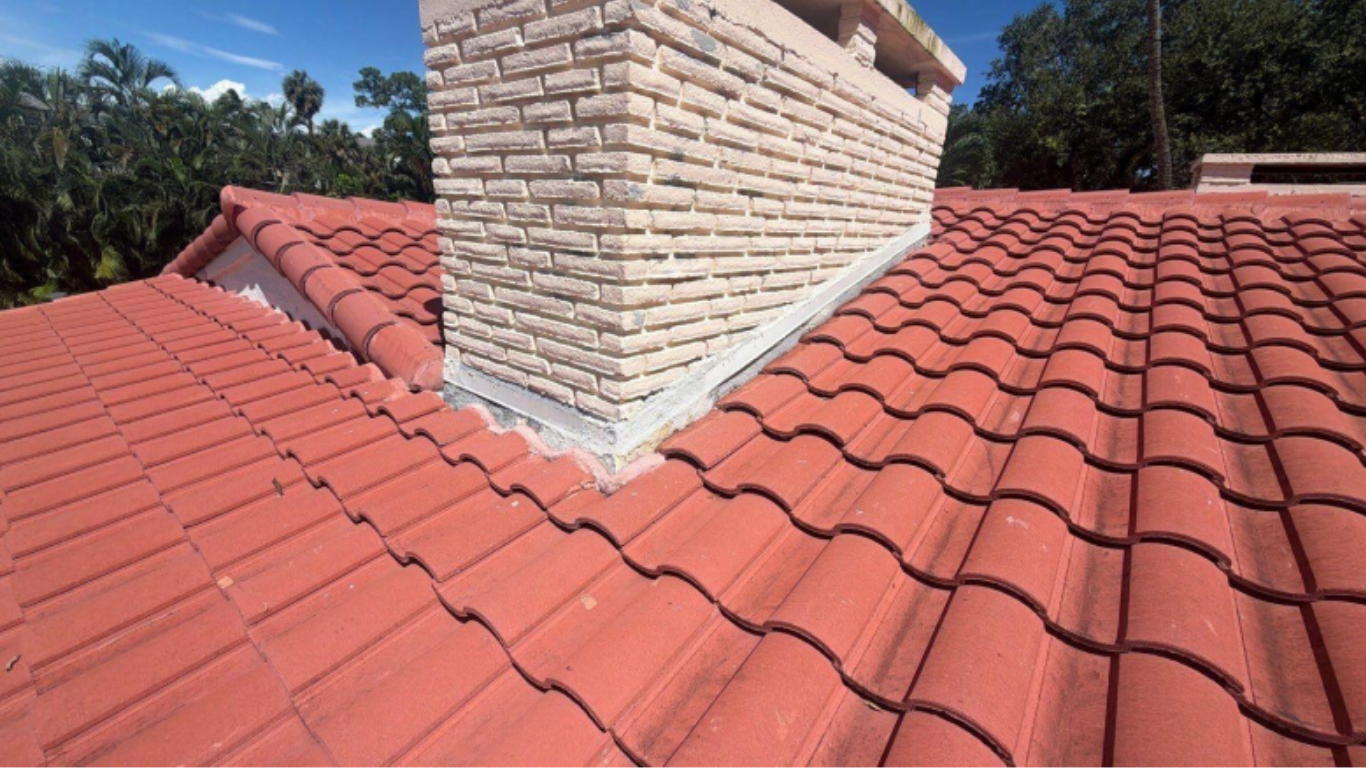
Tile roofing is practically iconic across South Florida neighborhoods, from Victoria Park to Coral Ridge. Available in barrel, S-tile, and flat profiles, concrete and clay tiles deliver timeless Mediterranean curb appeal combined with heavy-duty structural mass.
- Upfront Cost: Moderate to High
- Lifespan: 40 to 50+ Years (Tile shell); 20 to 25 Years (Underlayment)
- Wind / Hurricane Rating: Excellent (Up to 150–175+ mph when mechanically fastened or foam-adhered)
- Salt Air Resistance: Exceptional (Inert to saltwater corrosion)
Pros & Considerations
- Thermal Envelope Efficiency: Because tiles are heavy and elevated slightly off the roof deck, they create an air gap that naturally insulates your home, keeping attic spaces cooler and cutting summer AC bills.
- Corrosion Immunity: Unlike metals or wood, clay and concrete tiles will never rust, rot, or decay in coastal salt spray.
- The Underlayment Reality: While the tile shell itself can easily last 50 years, the underlying waterproof underlayment (the true barrier keeping your home dry) breaks down over 20 to 25 years under Florida heat. Replacing tile underlayment requires a full "tile lift and relay" service.
2. Standing Seam Metal Roofing: The Ultimate Coastal Fortress
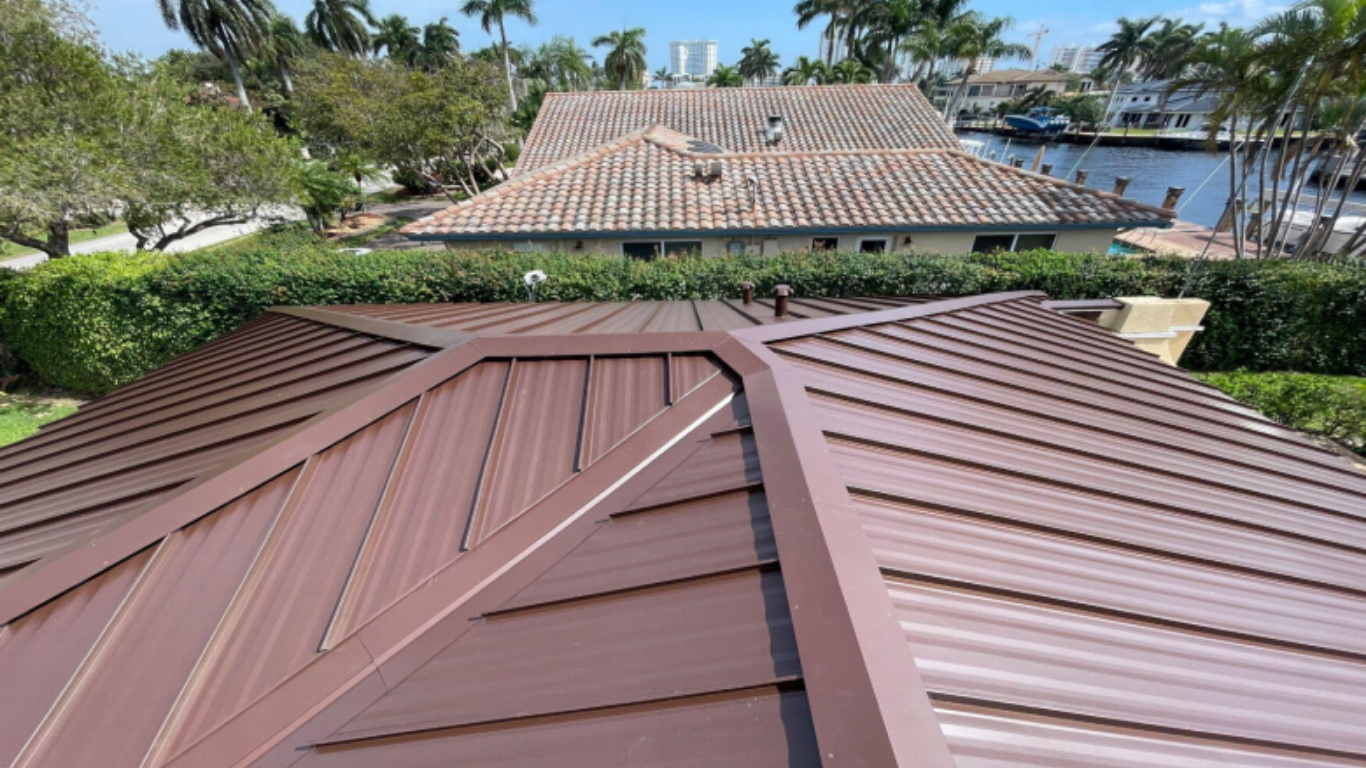
Metal roofing has surged in popularity across Fort Lauderdale and Miami in recent years, particularly Standing Seam profiles where fasteners are hidden beneath interlocking vertical seams.
- Upfront Cost: High
- Lifespan: 45 to 70 Years
- Wind / Hurricane Rating: Superior (Proven wind uplift resistance matching peak HVHZ codes)
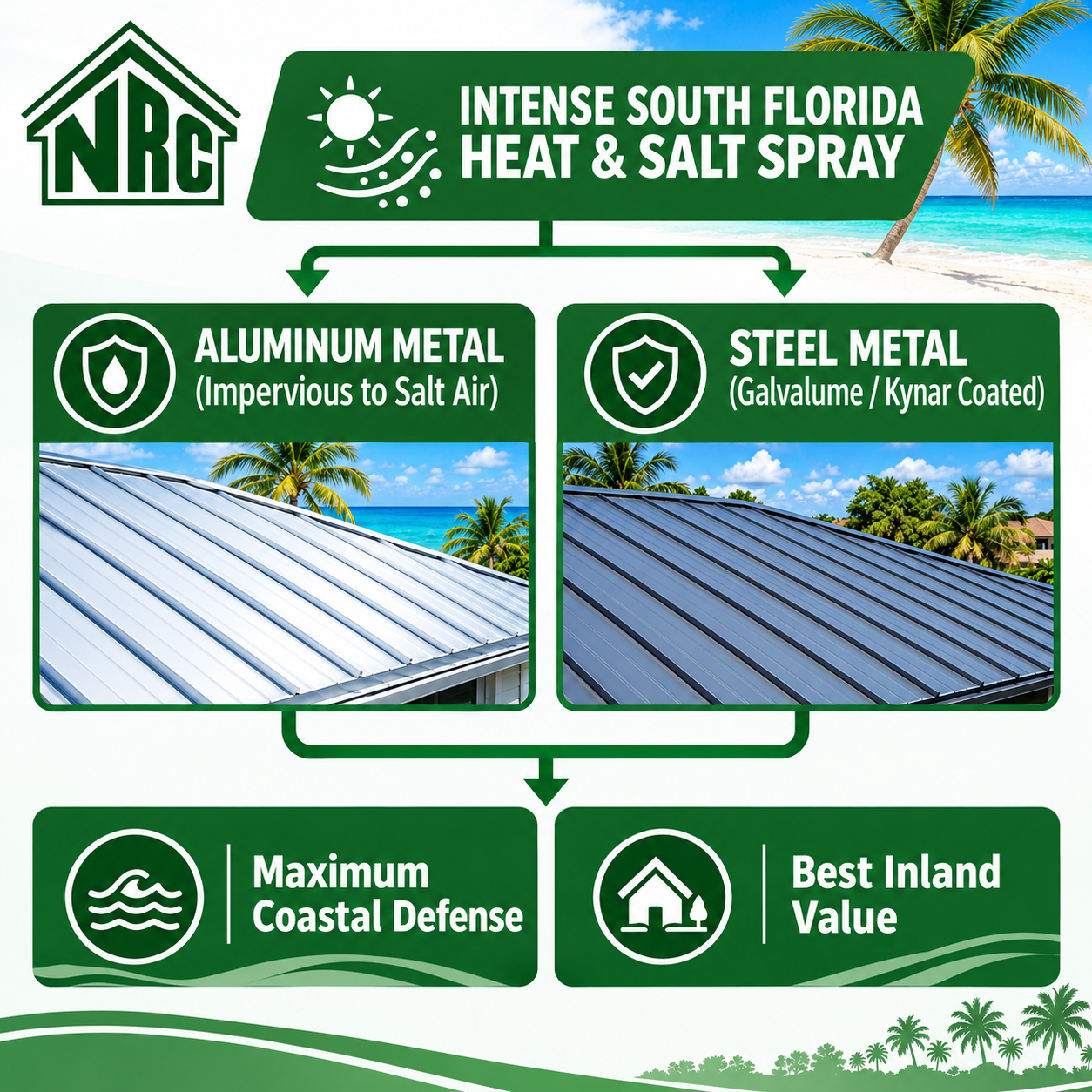
- Salt Air Resistance: High (Provided the proper metal alloy & finish are selected)
Pros & Considerations
- Unbeatable Wind Uplift Resistance: Interlocking standing seam panels shed wind smoothly, leaving virtually no edges for hurricane gusts to catch and tear off.
- Material Matters Near the Coast: If your property is within 1,500 feet of salt water (Intracoastal, canals, or oceanfront), Aluminum standing seam with a Kynar 500 coating is essential. Steel or Galvalume panels will eventually rust at cut edges when exposed to constant salt spray.
- Reflective Energy Savings: Metal reflects up to 70% of solar radiant heat away from your roof, drastically reducing thermal transfer into top-story rooms.
3. Architectural Asphalt Shingles: Budget-Friendly Versatility
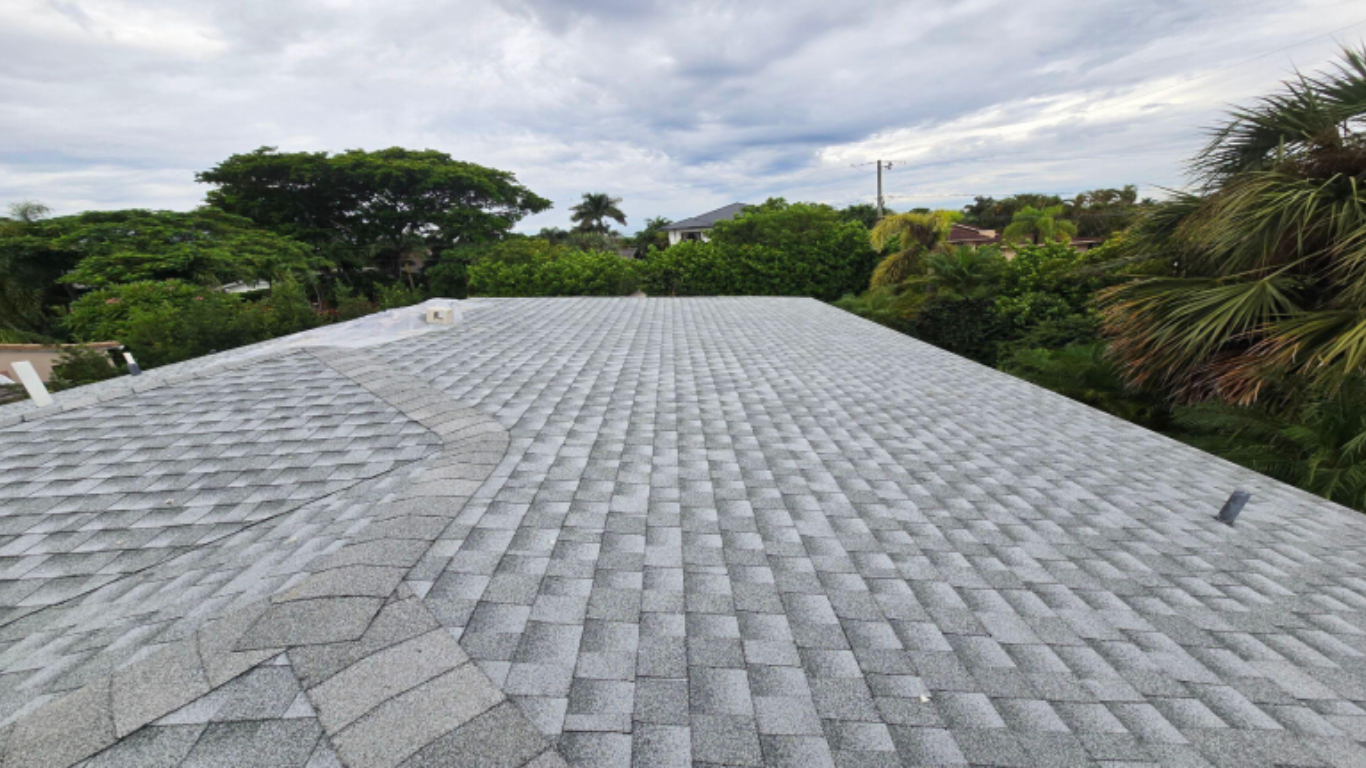
Modern dimensional or architectural shingles offer an attractive, cost-effective option for property owners looking for strong protection without the higher upfront investment of tile or metal.
- Upfront Cost: Low to Moderate
- Lifespan: 15 to 20 Years (Real-world South Florida lifespan)
- Wind / Hurricane Rating: Good (HVHZ-rated shingles offer wind warranties up to 130–150 mph)
- Salt Air Resistance: Excellent
Pros & Considerations
- Upfront Affordability: Architectural shingles are the most budget-friendly option to install, making them popular for rental properties, quick renovations, or budget-conscious homeowners.
- Faster Permitting & Installation: Shingle installations require less labor time than intricate tile or metal projects, minimizing household downtime.
- Heat Sensitivity: Darker asphalt shingles absorb immense solar heat, causing granules to bake off faster over time and shortening total lifespan compared to northern climates.
| Feature / Criteria | Barrel/Flat Concrete Tile | Standing Seam Metal | Architectural Shingle |
|---|---|---|---|
| Upfront Investment | $$$ | $$$$ | $$ |
| Average S. FL Lifespan | 40–50+ Yrs (Tile Shell) | 45–70 Yrs | 15–20 Yrs |
| HVHZ Wind Rating | 150–175+ mph | 175+ mph (Peak) | 130–150 mph |
| Salt Spray Defense | Immune | Excellent (Aluminum) | Excellent |
| Energy Efficiency | High (Air gap insulation) | Highest (Radiant heat reflection) | Moderate |
| Maintenance Need | Periodic tile replacement | Minimal | Moderate granule checks |
Get Honest Advice for Your South Florida Property
Choosing the right roofing system isn't about picking the most expensive option; it's about choosing the material that fits your building's architecture, location, budget, and long-term goals.
At Nast Roofing, we bring 30+ years of local experience, top-tier craftsmanship, and transparent pricing to every residential and commercial project in Broward and Miami-Dade counties. Whether you need subtle roof repairs or are ready to explore options for a total replacement, our team is here to guide you every step of the way.
Need help deciding which material is best for your home or commercial building? Contact Nast Roofing today at (954) 782-7500 or visit us online to schedule your free estimate.
Frequently Asked Questions
Which roof material adds the most value to a South Florida home?
Standing seam metal and tile roofs consistently yield the highest return on investment (ROI) and curb appeal boost in South Florida. Buyers in Fort Lauderdale value metal and tile because they know these materials withstand major hurricane seasons and lead to lower home insurance premiums.
Why is my choice of metal so important if I live near the water in Fort Lauderdale?
Salt-laden air reacts aggressively with exposed steel. If you live near a canal, the Intracoastal, or the beach, installing Galvalume or steel roofing will cause edge rust within a few years. Aluminum standing seam with a marine-grade PVDF/Kynar finish is the industry gold standard for coastal durability.
Can my property handle the weight of a new concrete tile roof?
Concrete tiles weigh between 900 to 1,100 pounds per square (100 sq. ft.), compared to shingles or metal which weigh 200–400 pounds per square. If your home was originally engineered for shingles or metal, a structural engineering load calculation is legally required before switching to tile to confirm your trusses can support the weight.
How do different roofing materials impact my homeowner's insurance rates?
Florida insurance carriers heavily incentivize wind mitigation. A new code-compliant roof, whether tile, metal, or high-wind shingle, installed with a secondary water barrier (peel-and-stick underlayment) and 6-inch ring-shank deck fastening qualifies you for substantial discounts on the windstorm portion of your policy.
What if I own a multi-family unit or apartment building?
You can still choose any of the materials discussed in this article; however, it’s important to remember that if your building is over 40 years old, Miami-Dade County code says that your building must be inspected, whether you’re replacing the roof or not. If you plan on replacing the roof, it’s a good idea to have the building inspected before doing so.
Share this article!
Owner & CEO of Nast Roofing
Written by Tim Nast
Tim Nast is the Owner and CEO of Nast Roofing, with more than 35 years of experience in roofing and contracting. A Florida State Certified Roofing Contractor since 1994, Tim specializes in residential and commercial roofing, Florida Building Code requirements, and roofing applications throughout South Florida.